

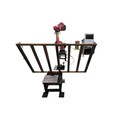
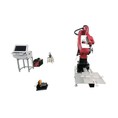
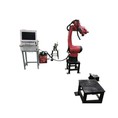
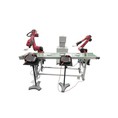
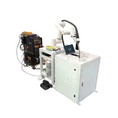
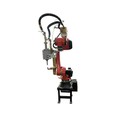
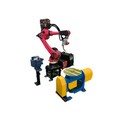
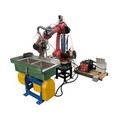
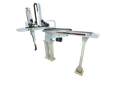
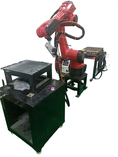
Because injection molding robots can significantly improve productivity and reduce production costs, stabilize and improve the quality of injection molded products, and avoid losses caused by human error, their role in injection molding production is becoming increasingly important. Domestically produced robots are relatively simple in type and mostly used for part handling.
With the development of the injection molding industry, more and more robots will be used in various processes such as material feeding, mixing, automatic mold loading and unloading, and waste recycling, and will develop towards intelligentization. Plastics occupy a very important position in our industrial and consumer materials, and many materials are gradually being replaced by plastics.
Plastic molding includes injection molding, vacuum forming, blow molding, extrusion molding, and die casting, with injection molding being the most widely used. It is extremely prevalent in industries such as automotive, communications, electronics, electrical, home appliances, medical, cosmetics, daily necessities, and office supplies.
The traditional injection molding process has evolved from manual mold closing to hydraulic mold closing using injection molding machines, and now to today's computer-controlled molding process. This progress is reflected not only in product quality and appearance but also in molding efficiency. Competition in the injection molding industry is becoming increasingly fierce, and molding quality and efficiency are crucial to a company's survival.
Molding quality is related to the performance of the injection molding machine itself, the mold process, and the surrounding environment, while molding efficiency is related to the mold precision, molding process, and production volume. With the increasing shortage of injection molding machine operators and the rising cost of labor, the use of robotic arms for removing parts from injection molding machines is becoming more and more widespread.