Highlights
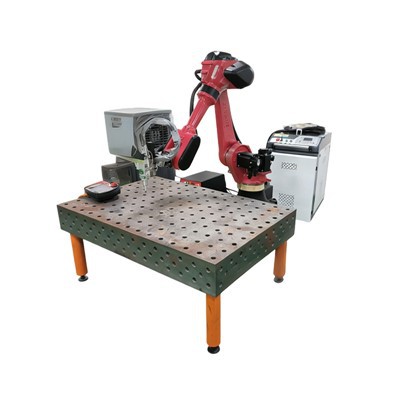
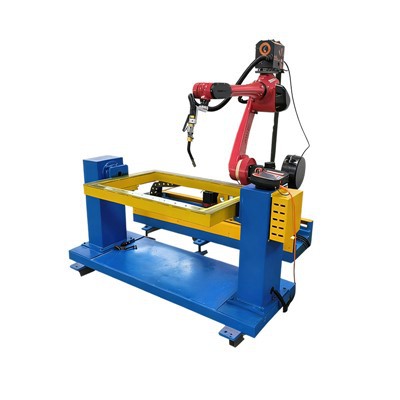
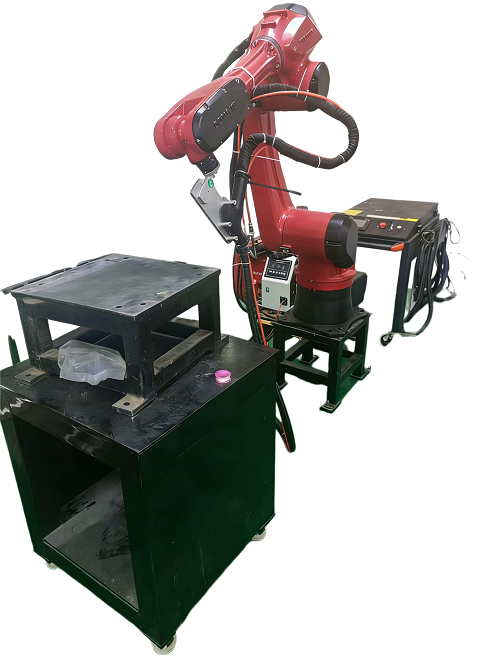
Supports both laser and MIG/TIG welding operations
Automated weld guidance via teach pendant.
Compatible with assembly jigs and elevated workbenches
Continuous production capabilities for 8–24 hour shifts
Products Description
|
Parameter Category |
Specific Specification |
|
Arm Span |
1895 mm |
|
Repeat Positioning Accuracy |
±0.05 mm |
|
Maximum Load |
20 kg |
|
Power Capacity |
5.87 kVA |
|
Equipment Weight |
Approximately 230 kg |
|
Protection Class |
Wrist: IP54; Body: IP40 |
Recommended Applications
|
Industry |
Typical Use |
Material Compatibility |
|
Hardware Manufacturing |
Frames, brackets, chassis |
Low-carbon steel, mild steel |
|
Automotive |
Car panels, exhaust systems, wheel hubs |
Steel, stainless steel, aluminum alloy |
|
Sheet Metal Fabrication |
Cabinets, enclosures, machine housings |
Low-alloy steel, cast iron, and thin aluminum sheets |
Elevated Fixing Base/Workbench
Can integrate with existing production lines through conveyor or jig interfaces
Space Requirement: 4–6 m², depending on workpiece size
Supports multi-station operation for balanced cycle times
Maintenance & Longevity
Daily: Inspect torch tip, clean wire feeder, check fixtures
Weekly: Lubricate the base and the wire feed mechanism
Monthly: Inspect electrical connections, PLC/HMI, and safety interlocks
Quarterly: Recalibrate positioning and verify repeatability
Expected Service Life: 8–10 years with standard industrial usage and routine maintenance
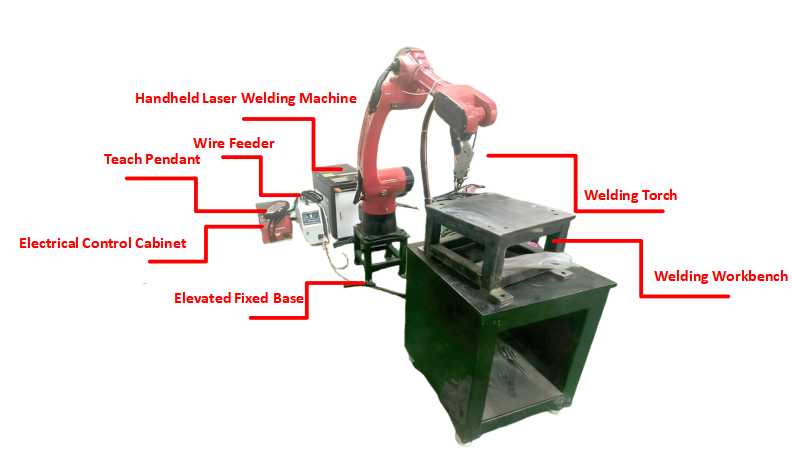
Physical Display
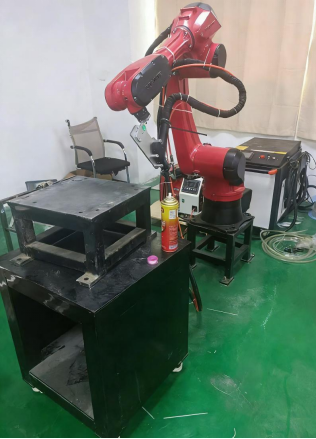
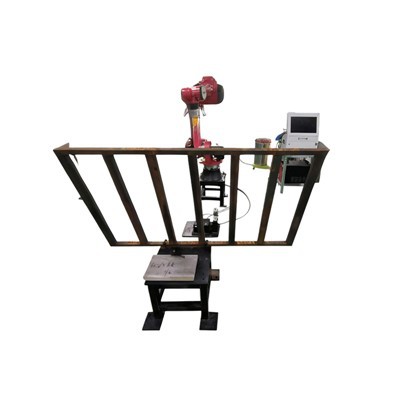
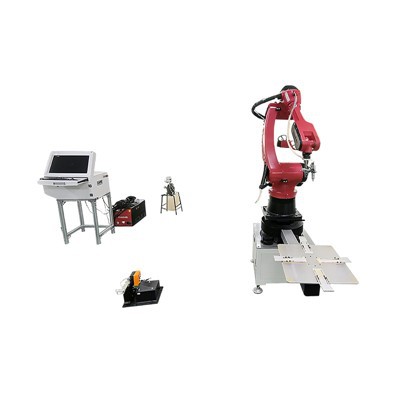
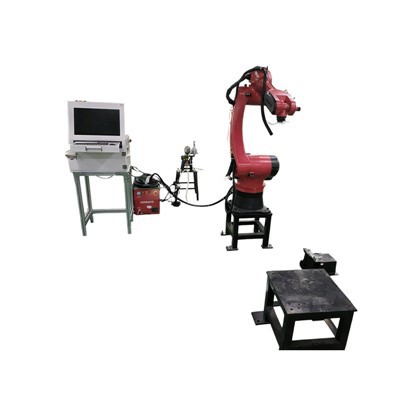
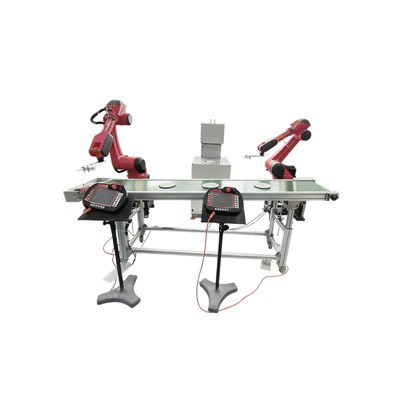
Figure 2.1 On-site Physical Object Diagram


FAQ
Hot Tags: handheld welding robot, China handheld welding robot manufacturers, suppliers, factory, Argon Arc Welding Robot, Spot Welding Robots, 3d robot laser cutting machine, TlG welding robot, automatic pneumatic welding robot, robotic welder