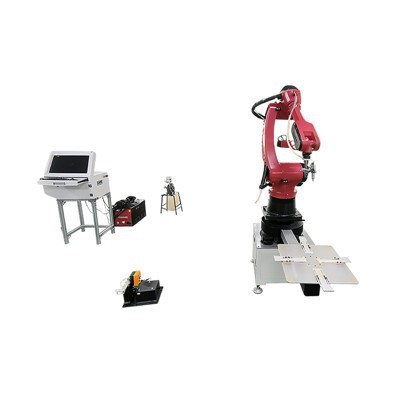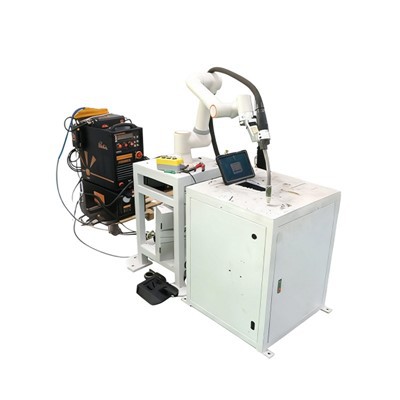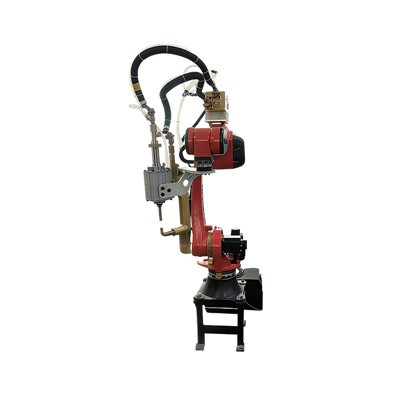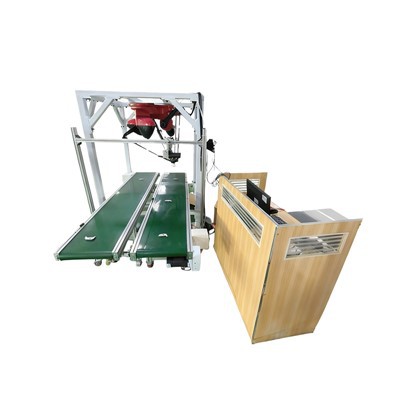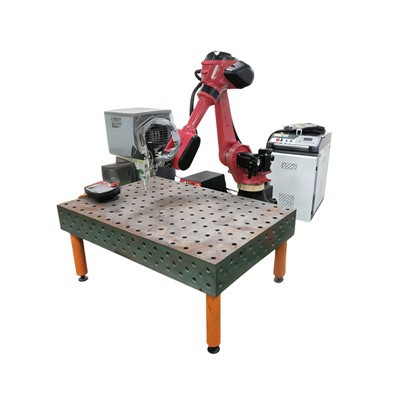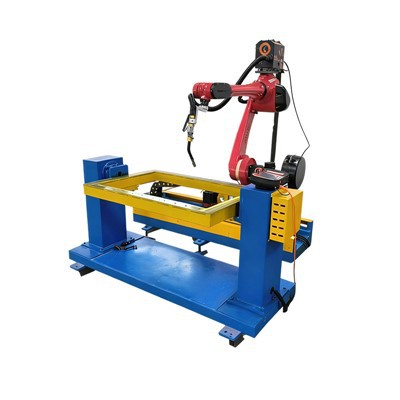
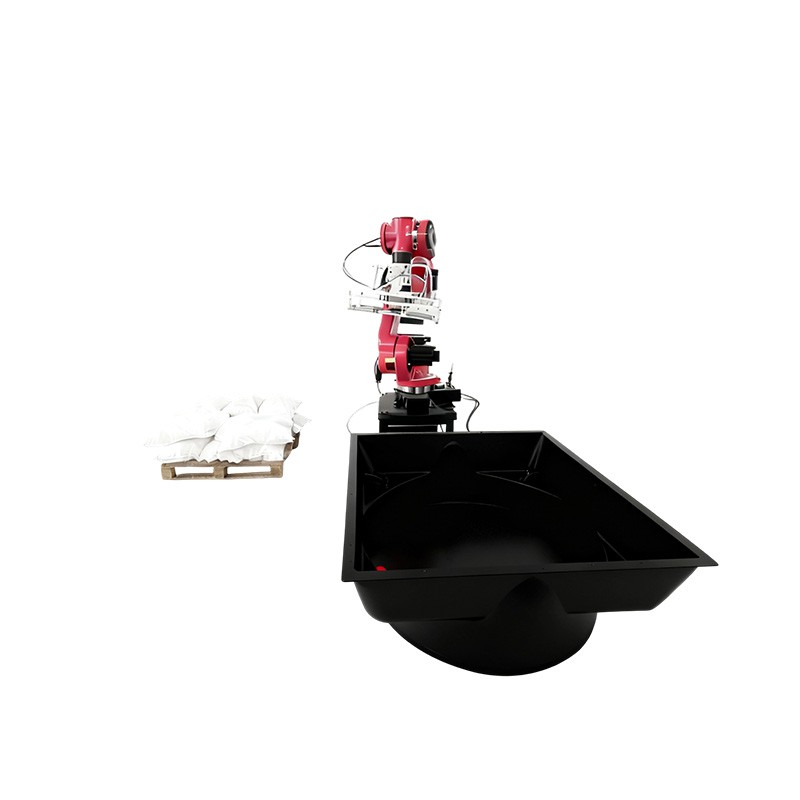

Automated Palletizing System is a heavy-duty industrial solution designed for continuous palletizing, stacking, and material transfer.
Key Technical Data
|
Parameter Category |
Specific Specification |
|
Arm Span |
2,563 mm |
|
Repeat Positioning Accuracy |
±0.1 mm |
|
Maximum Load |
50 kg |
|
Power Capacity |
8.87 kVA |
|
Equipment Weight |
Approximately 725 kg |
|
Protection Class |
Wrist: IP54, Body: IP40 |
| Axis | Joint Name | Motion Range | Maximum Speed |
| J1 | Base Rotation | Plus or minus 160 degrees | 84 degrees/s |
| J2 | Lower Arm | Plus or minus 70 degrees | 52 degrees/s |
| J3 | Upper Arm | -75 degrees to +115 degrees | 52 degrees/s |
| J4 | Wrist Rotation | Plus or minus 180 degrees | 245 degrees/s |
| J5 | Wrist Pitch | Plus or minus 125 degrees | 223 degrees/s |
| J6 | Wrist Roll | Plus or minus 360 degrees | 223 degrees/s |

Supported Product Types
The system can handle standardized packaging such as:
Rigid packaging: Standard cartons, plastic turnover boxes, storage containers
Flexible packaging: Woven bags, kraft paper bags, bulk powder or granule bags
Mixed loads: Configurable pallet patterns for combined product types
Where It Is Applied
- Packaging line end-of-line palletizing
- Warehouse outbound preparation
- Food & beverage production lines
- Chemical and fertilizer bag handling
- Industrial goods packaging centers
- Logistics consolidation zones
Core System Architecture
Six-Axis Robot (BRTIRUS2550A): Central kinematic unit providing six degrees of freedom.
End-of-Arm Tooling (EOAT): Custom pneumatic clamps, vacuum matrices, or bottom-support bag paddles.
Steel Mounting Base: Fixed elevation structure anchored via pre-drilled floor plates.
Infeed & Positioning Station: Alignment guides and sensors for accurate part presentation.
Control Cabinet & HMI: Industrial touch panel for pattern selection, PLC control, and diagnostics.
Safety Enclosure: Interlocked perimeter fencing and optical safety light curtains.
End-of-Arm Tooling Options
Pneumatic Parallel Clamps: Rubber-padded jaws for rigid corrugated boxes and totes.
Vacuum Suction Arrays: High-flow foam seals for smooth paperboard or sheet products.
Bag Paddles (Under-Lift): Side clamping plus bottom support for 25 kg to 50 kg woven or paper bags.


Robot electric control cabinet

Material Unloading Barrel

Robot End Fixture (Replaceable)


FAQ
Hot Tags: automated palletizing robot, China automated palletizing robot manufacturers, suppliers, factory, Depalletizing Robot, collaborative robot palletizer, palletizing robot arm, robotic case palletizer, box palletizing robot, palletizing depalletizing robot