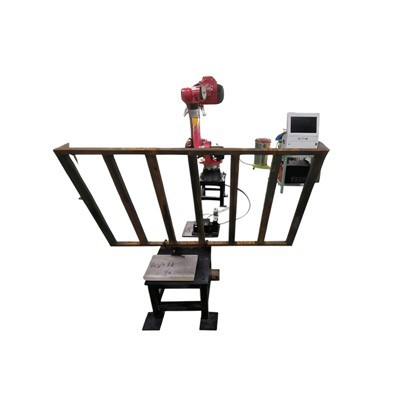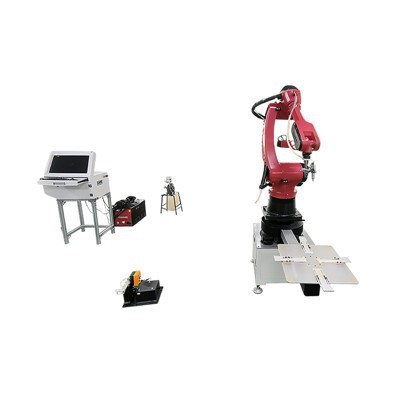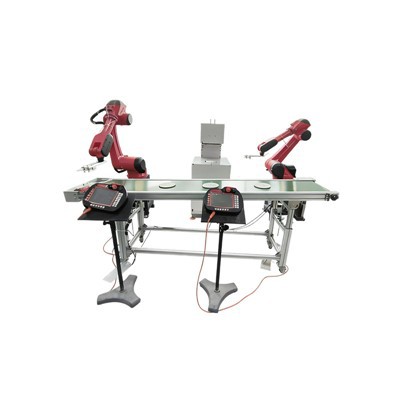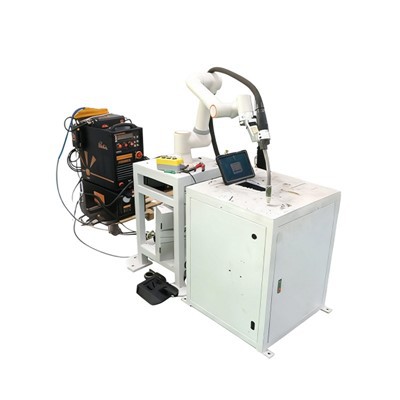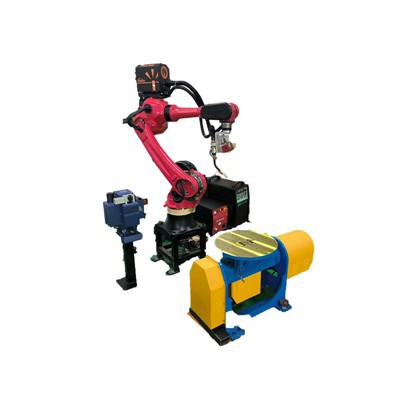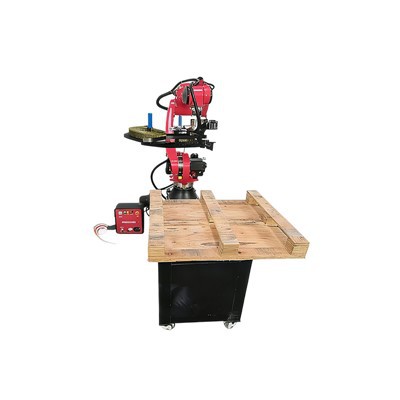
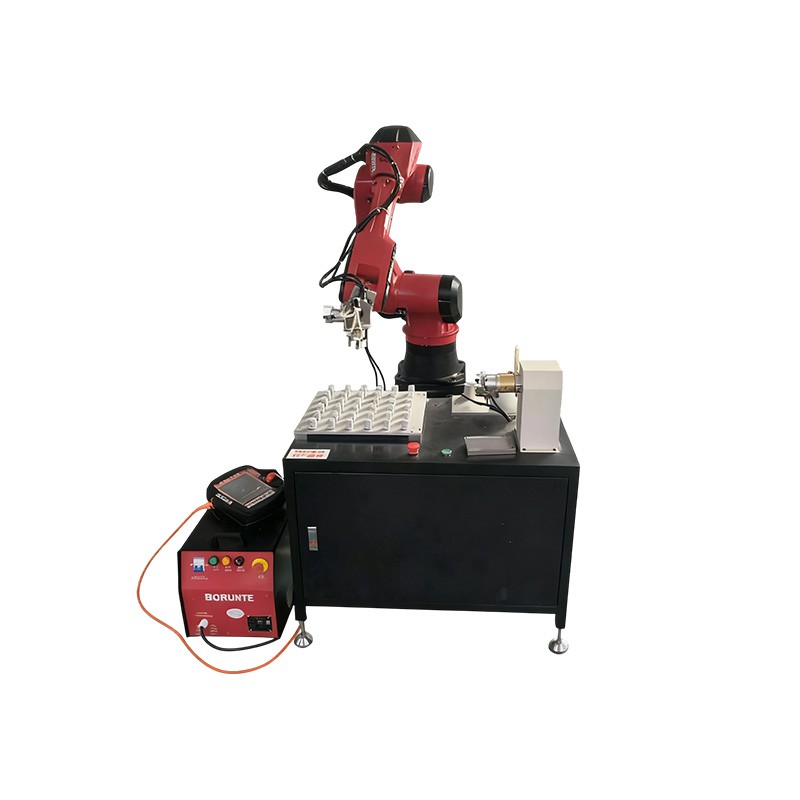
The CNC Machine Tending Robot system is an automated material handling workstation designed for CNC machine tools (lathes and machining centers). Built around a six-axis industrial robot, the system integrates customized end-of-arm tooling (EOAT), part staging trays, turnover units, and an industrial electric control cabinet.
Suitable Applications and Production Conditions
This robot is suitable for CNC automation in the following production conditions.
CNC lathe / turning center continuous production
Single-machine or multi-machine (1-to-2 / 1-to-3) production cell
Medium batch or high repeatability machining parts
Stable cycle-time machining processes
8–24-hour continuous production environments
System Performance Advantages
- Dual pneumatic grippers exchange raw and finished parts in one machine entry, reducing door-open time.
- ±0.05 mm repeatability supports accurate workpiece positioning for chuck or vise loading.
- IP54-rated wrist protection and oil-resistant cables help resist coolant and metal chips.
- Pilot-operated check valves help maintain gripper pressure during air supply loss.
Key Specifications: BRTIRUS1820A 6-Axis Robot
Main Specifications Table
| Parameter | Specification |
| Robot Model |
BRTIRUS1820A |
| Degrees of Freedom |
6-Axis Articulated |
| Arm Span / Reach |
1895 mm |
| Repeat Positioning Accuracy |
±0.05 mm |
| Max Payload |
20 kg |
| Power Capacity |
5.87 kVA |
| Equipment Weight |
Approx. 230 kg |
| Protection Class |
Wrist IP54 / Body IP40 |
Joint Motion Range & Max Speed
| Joint / Axis | Motion Range | Max Speed |
| J1 (Base Rotation) |
±155° |
110°/s |
| J2 (Lower Arm) |
-140° / +65° |
140°/s |
| J3 (Upper Arm) |
-75° / +110° |
134°/s |
| J4 (Wrist Roll) |
±180° |
273°/s |
| J5 (Wrist Pitch) |
±115° |
240°/s |
| J6 (Wrist Twist) |
±360° |
375°/s |

System Integration and Customization
Workpiece & EOAT Customization: Custom aluminum or steel jaws, soft copper inserts, and vacuum cups are designed directly from customer CAD files.
CNC Machine Interface Retrofit: Systems connect via factory automation ports or hardwired relay interface boxes for older machine tools.
Cell Layout & Safety Guarding: Integrates custom robot riser bases, wire-mesh perimeter fencing, interlocked maintenance doors, and safety light curtains.


Figure 2.1 On-site Physical Object Diagram

Robot electric control cabinet

Fixed elevation base for robot

Turnover Mechanism

Loading and Unloading Tray

Simulated Lathe

Loading and Unloading Fixture
Quality Verification & Pre-Shipment Testing
Every machine tending workstation undergoes full factory testing before shipment:
Mechanical & Pneumatic Assembly Inspection: Fastener torque checks on mounting bases and high-pressure leak testing on all pneumatic lines.
Electrical & Signal Continuity Checks: Point-to-point I/O wiring validation and emergency stop loop safety response tests.
Trajectory & Interference Simulation: Dry-run motion programming and collision testing using mock machine tool interface frames at our facility.
72-Hour Endurance Testing: Continuous 72-hour cycle testing under full nominal load to verify thermal drive stability, pick repeatability, and fault recovery routines.
Quality Documentation Package: Shipped with electrical schematics, PLC I/O mapping tables, mechanical BOMs, and user operation manuals.
Installation, Commissioning & After-Sales Support
On-Site Commissioning: Mechanical installation, PLC wiring, signal calibration, and production ramp-up.
Training & Documentation: Operator training, program switching, robot teaching, maintenance guidance, and English manuals, wiring diagrams, and I/O maps.
After-Sales Support: Remote technical assistance, spare parts supply, and a standard 12-month core component warranty.
Site Preparation: Customers must provide three-phase power, clean, dry compressed air (≥0.6 MPa), a level concrete floor, and accessible machine interfaces.
FAQ
Hot Tags: cnc machine tending robot, China cnc machine tending robot manufacturers, suppliers, factory, Lathe Loading Unloading Robot, robotic cnc machine tending, CNC Machine Tending Robot, cnc tending robot, loading and unloading robot, cobot machine tending