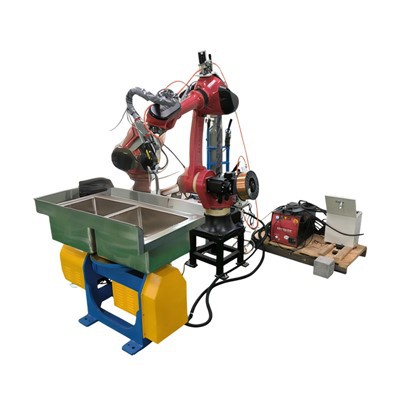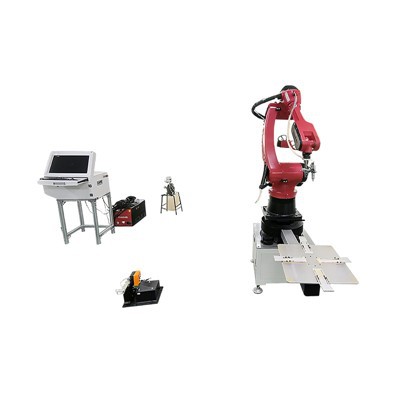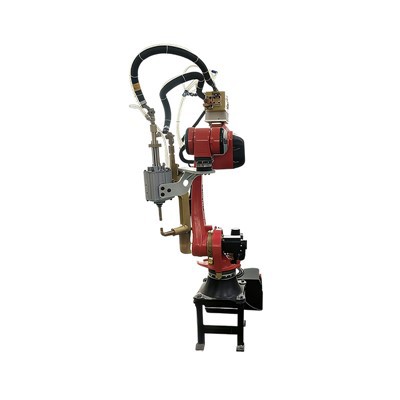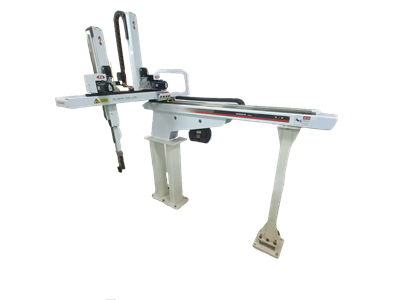

The Boruntes Large Gantry Welding Robot is an industrial automated platform engineered for structural fabrication of oversized, heavy metal components. Built around a rigid overhead gantry framework, the system provides multi-axis coordinated motion to execute continuous, high-deposition welds across expansive work envelopes without repositioning the workpiece.
Key Features
Rigid Box-Type Gantry Structure: Fabricated from stress-relieved structural steel plates, eliminating bridge sag and maintaining path accuracy across spans exceeding 10 meters.
Synchronized Multi-Axis Motion: Dual-side rack-and-pinion drive systems on the X-axis paired with AC servo motors ensure absolute positional tracking and prevent gantry skewing.
Modular Rail Integration: Ground-hardened precision guide rails bolted to machined foundations, delivering linear positioning repeatability within +/-0.1 mm.
Heavy Payload Capacity: Accommodates heavy welding torches, seam tracking sensors, wire feed units, and multi-kilogram payloads without mechanical bind.
Technical Specifications
|
Technical Parameter |
Specification Range / Value |
|
X-Axis Span (Rail Width) |
3,000 mm - 24,000 mm (Customizable) |
|
Y-Axis Stroke (Bridge Travel) |
Custom lengths per workshop layout |
|
Z-Axis Stroke (Vertical Reach) |
1,000 mm - 4,500 mm |
|
Positional Repeatability |
+/-0.1 mm |
|
Max Gantry Traverse Speed |
Up to 30,000 mm/min (X/Y axes) |
|
Welding Process Compatibility |
MIG/MAG, SAW, FCAW, TIG |
|
Control System |
Industrial CNC / Dedicated 6-Axis Robot Controller |
|
Drive System |
AC Servo Motors with High-Precision Planetary Gearboxes |
|
Power Supply Integration |
400A - 1000A Heavy-Duty Welding Power Sources |
|
Operating Voltage |
380V / 415V / 480V, 50Hz/60Hz, 3-Phase |
Applications
Structural Engineering: Longitudinal beams, crane girders, and massive box columns used in high-rise construction and heavy industrial plants.
Energy Sector: Wind turbine tower sections, tubular foundation piles, and thick-walled pressure vessels.
Rail Transit & Heavy Transport: Locomotives underframes, bogie frames, and oversized trailer chassis.
Shipbuilding: Modular ship deck panels, hull stiffeners, and large structural sub-assemblies.
Welding System
The system integrates multi-process welding technology tailored to heavy manufacturing requirements:
Power Source Integration: Direct compatibility with industry-standard multi-process inverters, supporting pulsed MIG for spatter-free root passes and high-deposition SAW for thick plate filling.
Wire Delivery Subsystem: Heavy-duty dual-drive wire feeders paired with 15kg to 30kg spool or bulk drum setups, preventing bird-nesting during long continuous runs.
Seam Tracking & Sensing: Laser vision or tactile seam tracking modules adjust the torch path in real time to compensate for thermal distortion and edge preparation variances.
Fume Extraction Integration: On-torch or overhead extraction hoods interface directly with the gantry frame to capture welding fumes at the source.
Customization Options
Envelope Scaling: Custom span widths and vertical clearances engineered to match existing factory crane clearances and workpiece dimensions.
Multi-Torch Configuration: Dual-bridge or multi-head setups operating simultaneously on a single rail to double deposition rates on symmetric parts.
External Axis Synchronization: Coordinated control packages for integration with motorized turning rolls, head-stock/tail-stock positioners, and sliding floor tracks.
Environment Hardening: Heat shields, water-cooled torch assemblies, and dust-sealed gear housings for heavy gouging, flux-cored, or submerged arc environments.
Manufacturing & Quality Control
Material Preparation: Flame and plasma-cut structural plates undergo edge milling and mechanical stress relief (thermal annealing) prior to welding.
Machining Accuracy: Gantry beams and column weldments are machined on large-scale floor-type boring and milling centers in a temperature-controlled environment to ensure straightness tolerances.
Geometric Calibration: Laser interferometer testing verifies linear positioning accuracy, squareness, and backlash compensation across the entire working envelope prior to disassembly.
Factory Acceptance Testing (FAT): Every system undergoes a dry-run operational test for 72 continuous hours, simulating full-load multi-axis motion and communication handshakes.
Safety & Compliance Standards
Functional Safety Architecture: Equipped with dual-channel safety PLC architecture, integrating Category 4, Performance Level e (PL e) emergency stop loops in accordance with ISO 13849-1.
Perimeter Safeguarding Integration: Interfaces seamlessly with light curtains, safety laser scanners, and physical interlocked safety fencing to restrict personnel access during automated gantry traversal.
Electrical & Control Compliance: Main control enclosures are engineered to IP54/IP55 standards, utilizing components certified to CE, UL, and CSA electrical codes depending on regional delivery destinations.
Operator Safety Interlocks: Software and hardware overrides prevent gantry motion when service hatches are open, maintenance lockouts are engaged, or welding shielding gas pressure drops below safe thresholds.
Lifecycle Support & Maintenance Assurance
Remote Diagnostics: Secure VPN gateway module enables direct connection for PLC logic updates, parameter tuning, and troubleshooting by Boruntes engineers.
Preventive Maintenance Schedule: Detailed component wear-replacement intervals provided for servo drives, gearboxes, bearings, and contact tips.
Local Spares Inventory: Critical wear parts and standardized replacement motors stocked globally to minimize logistics downtime.
On-Site Commissioning: Field service engineers supervise mechanical assembly, rail alignment, electrical tie-in, and initial weld procedure qualification (WPQ).
FAQ
Q: What foundation requirements are necessary to install a large gantry welding system?
A: The system requires a reinforced concrete foundation slab of minimum thickness (typically 300mm to 500mm depending on span length) with embedded anchor plates or chemical grouting studs to ensure zero shifting under dynamic gantry acceleration. Foundation layout drawings are supplied during the engineering phase.
Q: How does the system compensate for thermal distortion during long multi-pass welds on thick steel?
A: Laser seam tracking and arc-sensing adaptive control units adjust the torch trajectory in real time. Additionally, programmable multi-pass sequencing and synchronized workpiece positioners allow parts to be rotated into the flat position, minimizing gravity-induced sag.
Q: Can this gantry system be integrated with existing welding power sources owned by our facility?
A: Yes. The control interface supports analog and digital I/O protocols, as well as fieldbus communication (Profinet/Modbus), enabling integration with industrial multi-process inverters.
Q: What safety certifications and compliance standards does the system meet?
A: The electrical and control architecture complies with CE and UL requirements, utilizing ISO 13849-1 (Cat 4, PL e) safety loops for emergency stops and perimeter safeguarding interlocks.
Q: What is the standard lead time for a custom-configured gantry welding robot?
A: Standard configurations require 12 to 16 weeks from drawing approval to factory dispatch, depending on span dimensions and custom tooling requirement.
Hot Tags: large gantry welding robot, China large gantry welding robot manufacturers, suppliers, factory, Argon Arc Welding Robot, collaborative robot welding, offline welding programming robot system, robot laser welding machine, Spot Welding Robots, welding robot arc control system